Cleaning is one of the most satisfying enterprises. Polish any spatula and ponder whether Frederick the Great knew the satisfaction of fishing a spoon from the bottom of a wash sink. No ability exists far away enough from the finest pleasures of brushing away the fixed history of cheese to a bowl. Perhaps that is why Frederick surrounded himself with peoples who had dug deep into the dirt of the human psyche. Perhaps it occurs to transcribe that idea instead of the piano motif singing the start of a canon that Bach writes or dedicates to someone (to Frederick) before they start washing our dishes, where silver spoons and non-abilities form their analogs.
At some point it is better to just rest and not to think, like washing the dishes is to an eerie canon that loops in on itself, spiraling into a drain where the water mixes with every idea we drink. We want to no longer separate the singular motif stacked on top of itself but all purification processes are complex. The purposes of distillation involves finding where a single melody becomes everything, when a cockroach has fallen into your glass of water and you must rescue it from the idea that things are disconnected even though you are so familiar with the technique of creating analogies. What separates sense from nonsense or an essay from a poem is an invisible (perhaps empty) thread of meaning that connects each sentence. Isn’t that a correspondence? It is just as easy to start discussing an entirely different concept to see what is being discussed and explored.
I wonder did the members of the National Security Council sense what their appetite was telling them to eat for lunch. Did gastronomy meet the agenda for determining the course of history? Or were they also separate from the plates that served them food? Did the secret recordings capture the grumbling of Robert McNamara‘s stomach? I learned that at a certain point people believed the Cold War ended and the current issue is that history thinks itself resolved. Like washing the dishes. Which are never clean and disconnected from the timeliness of writing an essay on Bach at the Keyboard Drinking Water (there is no separation).
BKDW
Think for a moment that Bach needed to drink water. This image is hardly enough evoked into mind through any biography. Bach needed to drink water and perhaps it is the essential nature of this necessity that it barely seems worth mentioning. How often are details of survival and nuance missed in the sacrifice of being concise. And how often do people think of a moment in history, the image, when Bach needed to fill a glass of water to emphasize it’s necessity. Just as Robert McNamar’s hunger is grumbling while he discusses the cards on the table, while someone else fills a pitcher of water in the room, scrambling the future mission of hidden tape transcription. What did he have for lunch? Or did he suppress, bottle up his hunger like he did his emotions? Then was that the exasperating clanking sound Stern attributed to the venting steam ‘radiator’? How many detailed moments, actions since then have we taken and sidestepped complete and total annihilation every day–no, the Cold War ended long ago and we carry that into every day we polish our dishes. Am I in the radiator, in that pressurized room now? Am I the steam of the water? In spite of the weather report outside, what were the conditions of his stomach?
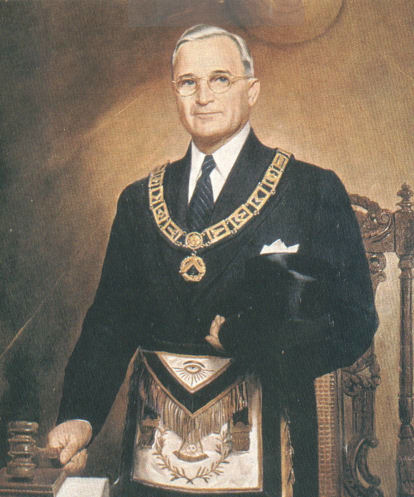
Few of ever enjoy a new zest for how incantation or ritual can function yet they can sing through language at a moment. Everyone has become bored, uncomfortable with irrationality, not realizing how exciting our war rooms of the every day are and that our very tight rope actions balance us upon the threshold of complete and total devastation. Must clean. Orderliness of mind, the stomach can wait. Even Crowley became systematic in name of love for the glory of it’s rocket child but he ended up a sick, poisoned and demented man. So now the melody is remembered and the movement is understood. Why did he do it though? What did it mean to him? The proportions are not measured by the clock, but the closer to the unity the more perfect. There’s nothing approximate about the numbers: 2400 bars, 1:1 proportion, 1600 and 1800 bars, 800 bars, they continue throughout the works, seen as the most beautiful, most perfect glorification of the divine. Because of precision and surrender. Are our clocks now measuring entropy or our triads oscillating in symphony?
“I don’t think there’s a mathematical basis for it—it’s just a bunch of overlapping triangles”.
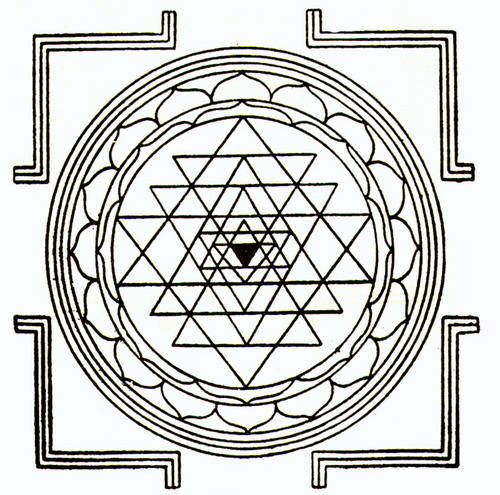
Four:Sixteen:Eight:Fourteen:Fourteen:Ten:Ten:Eight:One:Bindu
Leave a Reply